

EQUITY & MUTUALITY
…Imago D.E.I.
I am a human being. I seek to follow the shalomic Way of Jesus. I am also white, educated, middle class, relatively able-bodied, and nonbinary. Many of these identities have afforded me forms of privilege that I did not earn. They also locate me within systems of power that have profoundly shaped the modern world.
As I have come to understand it, the ideology of whiteness—not white skin, but the social imagination that normalizes hierarchy, domination, extraction, and superiority—may be among the most destructive forces in human history. Emerging alongside European colonial expansion and sustained through slavery, conquest, segregation, and countless other forms of oppression, it has distorted our relationships with one another, with creation, and with G-d. It is a story that continues to wound us all, and one that must come to an end.

As I continue listening to voices long pushed to the margins, I am becoming more aware of both the personal and systemic ways I have participated in and benefited from structures designed to advantage people like me while disadvantaging Black, Brown, Indigenous, Asian, female, queer, disabled, and other historically marginalized communities. This is not a confession completed once, but an ongoing practice of learning, repentance, and transformation.
Whiteness, as I understand it, is ultimately a way of seeing the world. It abstracts truth from lived reality, separates people from one another, and alienates communities from the places they inhabit. It fragments what G-d continually seeks to reconcile. Against this, the Way of Jesus invites us into another imagination—one of mutual belonging, embodied presence, truth-telling, reconciliation, and shalom.
In his essay, “Can ‘White’ People Be Saved?”, Willie James Jennings offers a searching theological reflection on this very question:
Whiteness comes to rest in space. The maturity whiteness aims at always forms segregated spaces. It forms lives lived in parallel, whether separated by miles or inches. It constructs bordered life, life lived in separate endeavors of wish fulfillment.
Segregated spaces must be turned toward living places where people construct together an everyday that turns life in health-giving directions. Overcoming whiteness begins by reconfiguring life geographically so that all the flows work differently…
Willie Jennings, “Can ‘White’ People be Saved?” page 43.
Dr. Jennings is one of a growing cloud of wise voices inviting me to become more deeply grounded in what is real—beginning with my own body, in this particular time and place. He reminds me that faithful living always starts somewhere: here, among these neighbors, within this watershed, on this land with all those who have called it home before me, who share it with me now, and who will inherit it after me. I continue to repent of every assumption that my culture, my time, my place, or my perspective is somehow superior to others. Instead, I seek to become more deeply rooted, more fully present, and more faithfully connected.

As a follower of the Jesus Way, I hear within Scripture an invitation to welcome and delight in every human being as one created in the imago Dei—the image of G-d. I have long smiled at the serendipity that the work of Diversity, Equity, and Inclusion shares the acronym DEI with the Latin word Dei (“of God”). While merely a linguistic coincidence, it serves as a gentle reminder that Christian faith has always pointed toward a G-d whose very life is relational.
The Christian confession of the Trinity imagines Divine life as an eternal communion of self-giving love. Unity is not achieved by erasing difference but by embracing it. Father, Son, and Holy Spirit remain genuinely distinct while making room for one another in perfect love. Difference, then, is not a problem to overcome but a gift through which love becomes possible. The greater our openness to those whose lives differ from our own, the greater our opportunity to encounter something of the expansive love of G-d.
This is one reason I treasure the practice of Holy Communion. Around Christ’s table, we do not gather because we are alike or because we have achieved moral perfection. We gather because grace has made room for us all. The table becomes a foretaste of the beloved community—a people continually learning to receive one another as gifts.

As my understanding has deepened, so too has my awareness of the many ways I have knowingly and unknowingly benefited from systems of privilege associated with whiteness. I continue to awaken to the suffering, exclusion, and inequities these systems have inflicted upon countless neighbors. Repentance, for me, is therefore not simply a feeling of regret but an ongoing practice of truth-telling, relinquishment, repair, and solidarity. I do not wish to hide behind good intentions or seek reassurance from those who have borne the greatest burdens. Instead, I hope to spend the rest of my life listening, learning, making amends where I can, and participating in the slow work of dismantling the systems that deny the image of G-d in any person while joining others in cultivating communities marked by justice, belonging, reconciliation, and shalom.
.
- I open myself to learn, study, and grow in my understanding of my whiteness & how I’ve been shaped systems that privilege me.
- I open myself to identifying racial inequities & disparities.
- I open myself to confront & interrogate the racist ideas that I have held and will discover are still in me.
- I open myself to develop a more robust intersectional anti-racism.
- I open myself to champion anti-racist ideas, language, practices, & policies.
- I open myself to pray, dream, collaborate, and work toward new & truly equitable ways of being human together.
- I open myself to interrogate my assumptions of self: opening up to discover the impact of my white, male, sis, heteronormative, able-bodied sense of identity.
- I open myself to use my platform as a theologian, educator, writer, & speaker to foster a more Shalomic world for all.
.
I seek to engage in anti-racist action, and as I do I will open up to hear and learn how to be an even more effective ally in pursuit of the common good for all. As Angela Davis says,
I’m no longer accepting the things I cannot change… I’m changing the things I cannot accept.
Angela Yvonne Davis
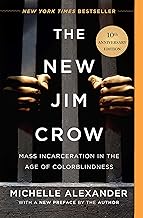
The books below are a few of the companions that have helped—and continue to help—shape my understanding of race, whiteness, intersectionality, and the long journey toward justice. They have invited me to see more clearly the realities of white-body supremacy, to recognize my own participation in systems of privilege, and to imagine more faithful ways of being human together.
I offer them not as the final word, but as trusted guides that continue to challenge, unsettle, and inspire me. My hope is that they might enlarge your imagination as they have mine, joining us in the ongoing work of cultivating G-d’s shalom—for all people and the whole of creation.
Peace, dwight
 |  |  |  |  |
 |  |  |  |  |
 |  |  |  |  |
 |  | ![Letters to a Birmingham Jail by [Bryan Loritts, John Perkins, Crawford W. Loritts Jr, John Piper, Matt Chandler, Soong-Chan Rah, Charlie Dates, Albert Tate, Sanders Willson, John Bryson]](https://m.media-amazon.com/images/I/41iS4viKT2L.jpg) |  |  |
 |  |  |  |  |
 |  |  |  |  |
 |  |  |  |  |
WELCOMING & BELONGING
… you are not alone